

How to enter Russia’s market of 146 million consumers and launch your first deal in 30 days
Why Russia is a historic opportunity for African entrepreneurs
-
146 M
consumers in Russia, a market that has been looking for new suppliers since 2022
-
$1.8 T
Russia’s GDP: one of the world’s largest economies in natural resources
-
×2–4
higher selling price when you export processed goods instead of raw commodities
-
30 days
a week-by-week action plan from choosing your sector to your first deal
Who should read this book
-
Business owners and investors
Goal: Diversify beyond traditional Western and Chinese partners with joint ventures, mining services, education and tech projects
-
Exporters and importers
Goal: Sell processed African goods to 146 million consumers or bring Russian fertilizers and machinery to Africa
-
Students and young graduates
Goal: Position yourself early in a growing market: trade between the two continents, Russian universities and IT skills
-
Intermediaries
Goal: Connect Russian suppliers with African buyers and earn 5–15% per deal with almost no starting capital
What you will learn
-
Where the real margins are
Sectors and products with strong demand on both sides: what to export to Russia and what to bring back to Africa
Most profitable sectors -
What Russia needs from Africa
Resources, food and partnerships: why you negotiate as an equal partner, not as a supplicant
-
How Russians do business
Why trust comes before the contract, who really signs and what coldness and silence actually mean
-
Protect your money
How to get paid under sanctions, spot fake intermediaries and make contracts hold up in a dispute
-
Negotiation scripts
Ready-made wording for the first message, the negotiation and the closing, in English and Russian
From contact to contract- Contact
- Negotiation
- Closing
Inside the book: 22 practical chapters
From understanding the Russian market to your first contract and a 3-year plan
- Part 1 · Understanding the landscape
-
Russia remains one of the world’s largest resource economies: 146 million people and about $1.8 trillion in GDP. Since 2022, sanctions have pushed it to look for new suppliers and outlets, and Africa is high on the list. The chapter shows what Russia seeks in Africa and what you can gain.
- Market size
- Russian interests
- Win-win
- Diversification
-
Relationship comes before contract. Why Russians do not trust quickly, how to read a direct and tough negotiation style, who really makes decisions in a strong hierarchy, and which cultural codes matter: titles, punctuality, gifts.
- Trust
- Hierarchy
- Negotiation
- Etiquette
-
Exotic fruits, cocoa, coffee and cashews for Russia; fertilizers, machinery and equipment for Africa; mining services; education and tech. Processed products systematically earn more than raw commodities, up to ×8 for dried mango.
- Agriculture
- Fertilizers
- Mining
- Education & tech
-
Never enter the market alone. Why a local partner is indispensable, where to find one (forums, embassies, chambers of commerce, LinkedIn, trade shows) and a five-step entry strategy with timelines, from product study to gradual expansion.
- Local partner
- Channels
- Market test
- 5 steps
-
Sanctions and SWIFT restrictions, scams and fake intermediaries, language barriers and legal risks. Red flags to watch for and how to verify a Russian company by its INN and OGRN before you pay anything.
- Sanctions
- Scams
- Language
- Legal risks
-
The five attributes that decide long-term success in the Russo-African market: patience, a strong network, cultural understanding, long-term vision and adaptability, and what each of them means in practice.
- Patience
- Network
- Culture
- Vision
- Part 2 · Execution and operations
-
Always demand a written contract, in your language and in Russian. The essential elements (parties, product, payment, delivery, Incoterms), a model dispute resolution clause for international arbitration and the other vital clauses.
- Bilingual contract
- Incoterms
- Arbitration
- Key clauses
-
Five settlement methods compared: non-sanctioned Russian banks, routing via Turkey, the UAE or Kazakhstan, yuan, dirham and rubles, stablecoins and barter, with the pros, cons and checks for each.
- Third countries
- Yuan & dirham
- Stablecoins
- Barter
-
The three main trade routes (Black Sea, via Turkey, via the UAE) with their pros and cons, the real challenges of transit times, freight costs and insurance, and the six documents every shipment needs.
- Black Sea
- Turkey
- UAE
- Documents
-
On the Russian side: GOST-R and EAC certification, sanitary and phytosanitary certificates and the import procedure. On the African side: duties, taxes, licenses and standards to check. Why a licensed customs broker pays for itself.
- GOST-R
- EAC
- Certificates
- Customs broker
-
Four models compared by capital, risk and profitability: export from Africa, import from Russia, joint venture and the intermediary, who needs almost no capital and earns 5–15% per deal.
- Export
- Import
- Intermediary
- Joint venture
-
A week-by-week plan: positioning, partner sourcing, negotiation and launch. By the end of the month you have a defined sector, a list of 10–20 prospects, a contract and a first transaction, even a small one.
- Positioning
- Prospects
- Negotiation
- Launch
-
The five errors that most often ruin entrepreneurs in this market: going it alone, trusting too quickly, ignoring sanctions, weak contracts and underestimating Russian culture, with a solution for each.
- Isolation
- Blind trust
- Sanctions
- Culture
-
Build a solid network, travel to Russia in person, work on several deals at once and think on a 5-to-10-year horizon: the largest profits come after years of persistence.
- Network
- Travel
- Several deals
- 5–10 years
- Part 3 · Advanced strategies and cases
-
Three simplified yet realistic cases: processed cocoa exported to Russia, Russian fertilizers imported to Africa and a pure intermediary. The problem, the solution, the results and the core lesson of each.
- Processing
- Import
- Intermediary
- Lessons
-
Where to look (LinkedIn, forums, chambers of commerce) and five checks before any commitment: the official registry nalog.ru, INN and OGRN, company history, reputation and references. Signals of a good partner and red flags.
- Verification
- Good signals
- Red flags
-
Ready-to-use wording for the first contact (in English and Russian), the negotiation and the closing, plus useful phrases and the right posture: stay calm, never show urgency, negotiate point by point.
- First contact
- Useful phrases
- Closing
- Russian version
-
A ready framework contract between an African and a Russian company: object, quantity and quality, price and payment, delivery, responsibilities and international arbitration. To be validated by a lawyer before use.
- Template
- Payment
- Delivery
- Arbitration
-
Control the value chain (processing, branding, distribution), run 3 to 5 deals in parallel, choose a niche such as organic, premium or halal products, and become the bridge that opportunities flow through.
- Value chain
- Parallel deals
- Niche
- Network
-
How to use the UAE, Turkey and China as financial and logistics hubs between Africa and Russia: bank accounts, transshipment, payments in dirham or yuan and partnerships with local companies.
- UAE
- Turkey
- China
- Payments
-
A three-phase master plan: understand and enter (months 1–3), stabilize and scale (months 3–12), establish leadership (years 1–3), with objectives and key actions for each phase.
- Phase 1
- Phase 2
- Phase 3
- Leadership
-
The market is demanding, Russians will test your credibility, you will make mistakes and some deals will fail. That is exactly why the market is still unsaturated, and why perseverance pays off.
- Credibility
- Mistakes
- Perseverance
- Opportunity
Enter the Russian market with a ready-made plan
Everything people usually learn through costly mistakes, in one book: partners, payments, contracts, logistics and customs
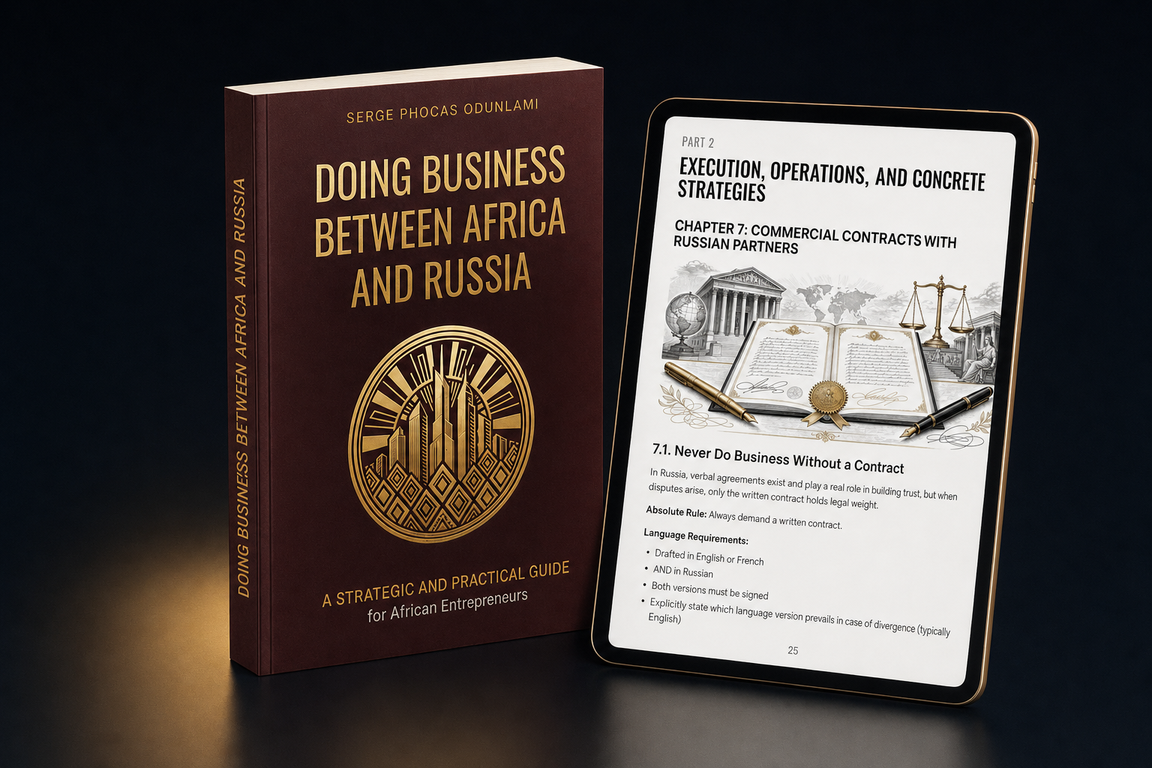 E-book · PDF
- 22 practical chaptersFrom the Russian business mindset to contracts, customs and a 3-year plan
- 30-day action planWeek by week: what to do and in what order
- Routes and customsBlack Sea, Turkey or UAE, GOST-R and EAC certification
- Payments under sanctionsThird-country routing, yuan and dirham, stablecoins and barter
- Real-world casesProcessing, direct import and the intermediary model
- Contract template and scriptsA ready framework contract, arbitration clause and negotiation scripts
Strategic and practical guide
Doing Business Between Africa and Russia
Special price
for the e-book edition
One mistake with a partner or a payment will cost you more than this book
- E-book (PDF)Sent to your email right after payment
- On any device Opens on your phone, tablet and computer
The author is the founder and President of the NGO House of Africa and chairman of the Africa Calling! business club
Three models that work
Simplified yet realistic cases from the book: what the entrepreneur changed and what it brought
- Transformation
Processed cocoa to Russia
×2–4
higher selling price than raw cocoa
StrategySwitched from raw cocoa to cocoa paste, with careful local packaging and a real brand.
- Direct import
Russian fertilizers to Africa
Stable
margins on massive local demand
StrategyBuys in bulk directly from Russian producers and distributes locally to farmers who need higher yields.
- Intermediary
The Africa–Russia intermediary
5–15%
typical commission on every completed deal
StrategyFinds a reliable Russian supplier and an interested African buyer and connects them, with zero inventory and very low capital.
Born in Africa, at home in Russia: the author knows both sides
Serge Phocas Odunlami was born in Benin, graduated from RUDN University in Moscow and has devoted his life to building ties between Africa and Russia. The book draws on his experience with House of Africa, the Africa Calling! business club and international forums.
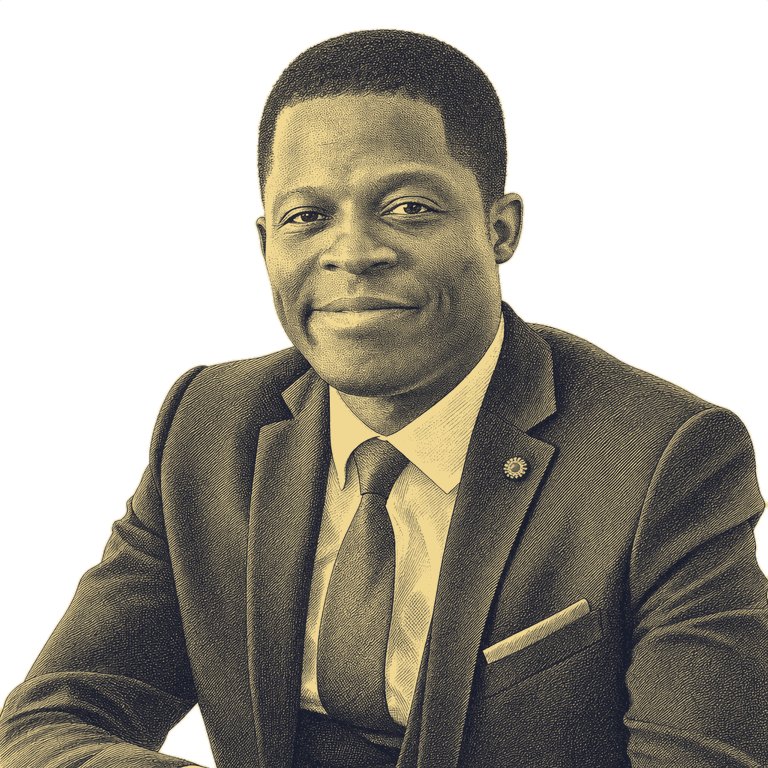
Why you can trust him
- Born in Benin, citizen of RussiaGraduated from the Peoples’ Friendship University of Russia (RUDN), which he entered on a scholarship
- Founder and President of the NGO House of AfricaA non-profit organization that strengthens business and cultural ties between Africa and Russia
- Chairman of the Africa Calling! business clubAnd President of the Beninese Diaspora in Russia
- Creator of international projectsAFROFEST, AFRICA CALLING FORUM, EURASIA AFRICA, AFRICA EXPO
- Order of the Peacemaker “For Contribution to Peace” (2017)“Youth Mentor” badge of distinction (2024), the “Professional of Russia” medal and the medal “In Memory of Marshal of the Soviet Union G. K. Zhukov” (2025)
My mission is to strengthen business and cultural ties between Africa and Russia.
Serge Phocas Odunlami
 House of AfricaFounder and President
 Business clubChairman
Ready to enter the Russian market?
Start with the practical guide: 22 chapters, a 30-day action plan and payment solutions under sanctions
Doing Business Between Africa and Russia
A strategic and practical guide by Serge Phocas Odunlami for African entrepreneurs doing business with Russia.
- info@sergephocas.me
- Moscow
© 2026 Serge Phocas Odunlami. All rights reserved.